Introduction: The Workout That Doesn't Require a Gym Membership
Let's be real — life is busy. Between work deadlines, family obligations, and the never-ending to-do list, finding time for fitness can feel like another impossible task. I've heard it a hundred times: "I want to work out, but I just don't have the time."
Here's the truth: you don't need a gym membership, expensive equipment, or a two-hour window to build a meaningful fitness routine. What you need is a plan that fits your life, not the other way around. A beginner-friendly home workout you can actually stick with — even on your busiest days.
The beauty of home workouts is that they remove the barriers. No commute. No waiting for machines. No intimidating gym culture. Just you, your living room, and a few minutes you can carve out between meetings or after the kids go to bed. In this guide, we'll walk through a practical, no-equipment home workout plan designed specifically for beginners with packed schedules. It takes 15–20 minutes, requires zero gear, and can be done in the space between your couch and coffee table.
Why Home Workouts Actually Work
There's a misconception that effective workouts require fancy equipment or a commercial gym. Research consistently shows otherwise. Bodyweight exercises can build strength, improve cardiovascular health, and boost mood just as effectively as gym-based routines — especially for beginners.
When you're starting out, consistency matters far more than intensity. A 15-minute workout you do four times a week beats a 90-minute gym session you skip because it's inconvenient. Home workouts build the habit first. Once the habit is solid, you can always level up.
Another underrated benefit? Privacy. Many beginners feel self-conscious exercising in front of others. At home, you can take your time learning proper form, rest when you need to, and progress at your own pace without judgment.
The 15-Minute Beginner Home Workout Plan
This plan follows a simple circuit format. Do each exercise for 30 seconds, rest for 15 seconds, then move to the next. Complete the full circuit three times. That's it — 15 minutes, start to finish.
Before starting, spend two minutes warming up. March in place, do gentle arm circles, and rotate your hips and ankles. A proper warm-up reduces injury risk and helps your body perform better.
1. Bodyweight Squats — Lower Body Power
Squats work your quads, hamstrings, glutes, and core all at once. Stand with feet shoulder-width apart, toes slightly outward. Lower your hips back and down as if sitting in a chair, keeping your chest up and knees tracking over your toes. Go as low as comfortable, then push through your heels to stand.
Beginner modification: Hold onto a sturdy chair or wall for balance. Don't worry about depth — focus on form.
2. Push-Ups (or Modified) — Upper Body Strength
Push-ups build chest, shoulder, tricep, and core strength. Start in a plank position with hands slightly wider than your shoulders. Lower your body until your chest nearly touches the floor, then push back up.
Beginner modification: Do them on your knees, or place your hands on a sturdy elevated surface like a kitchen counter.
3. Glute Bridges — Core and Posterior Chain
Lie on your back with knees bent and feet flat on the floor, hip-width apart. Press through your heels to lift your hips off the floor, squeezing your glutes at the top. Lower slowly and repeat.
Glute bridges are fantastic for counteracting the effects of sitting all day. They activate muscles that get weak and tight from desk work, improving posture and reducing lower back discomfort.
4. Plank Hold — Core Stability
Start on your forearms with elbows directly under your shoulders. Keep your body in a straight line from head to heels, engaging your core and glutes. Hold for the full 30 seconds.
Beginner modification: Drop to your knees while keeping your body in a straight line from knees to head.
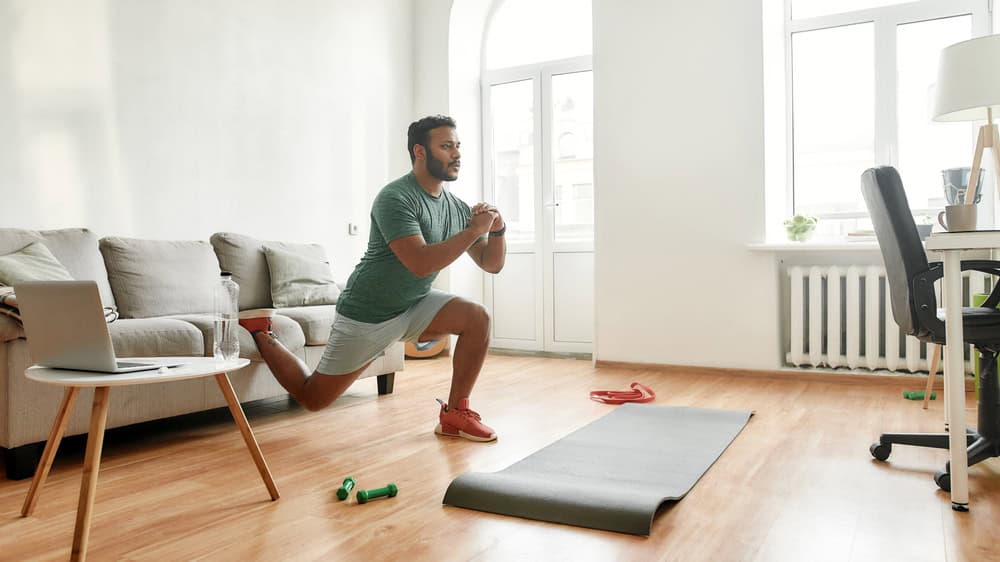
5. Lunges — Balance and Leg Strength
Step forward with one foot and lower your hips until both knees are bent at about 90 degrees. Your front knee should stay over your ankle, not past your toes. Push back to standing and switch legs.
Lunges challenge your balance, crucial for everyday movements and injury prevention. They also work each leg independently, helping correct muscle imbalances.
Beginner modification: Hold a wall or chair for balance, or do stationary lunges by stepping back into position instead of forward.
6. Mountain Climbers — Cardio and Core
Start in a high plank position. Bring one knee toward your chest, then quickly switch legs, keeping your hips low and core engaged. It looks like running in a plank position.
Mountain climbers get your heart rate up while working your core, shoulders, and legs. They're one of the most efficient exercises for busy people because they combine strength and cardio in one movement.
Beginner modification: Slow the pace and step one foot in at a time instead of jumping. Focus on form over speed.
7. Superman Holds — Back Strength
Lie face down with arms extended in front of you. Simultaneously lift your arms, chest, and legs off the floor, squeezing your lower back and glutes. Hold for a few seconds, then lower.
This exercise strengthens the muscles along your spine that support good posture. For anyone who spends hours hunched over a computer, Superman holds are a gentle but effective antidote.
8. Jumping Jacks — Cardio Finisher
Stand with feet together and arms at your sides. Jump your feet out while raising your arms overhead, then jump back to starting position. Simple, classic, and effective for elevating your heart rate.
Beginner modification: Step one foot out at a time instead of jumping. You'll still get the cardio benefit without the impact on your joints.
Weekly Schedule: Making It Stick
Here's a realistic weekly structure that even the busiest beginners can follow:
- Monday: Full-body circuit (15 minutes)
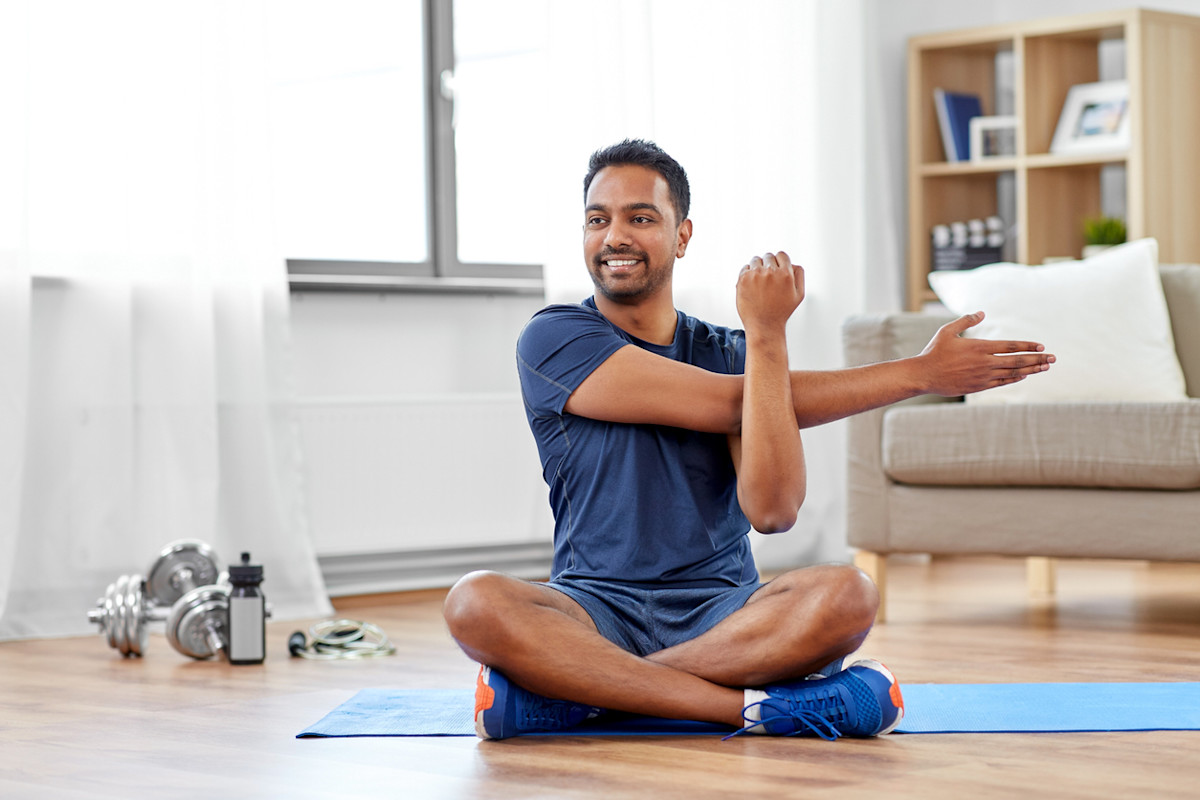
- Tuesday: Active rest — light walk or stretching (10 minutes)
- Wednesday: Full-body circuit (15 minutes)
- Thursday: Rest or gentle yoga (10–15 minutes)
- Friday: Full-body circuit (15 minutes)
- Saturday: Optional longer activity — hike, bike, swim, or dance
- Sunday: Complete rest or light stretching
This schedule gives you three focused strength sessions, two active recovery days, and two full rest days. It's sustainable, not overwhelming, and builds fitness gradually without burnout.
Comparison: Home Workout vs. Gym Membership
| Factor | Home Workout | Gym Membership |
|---|---|---|
| Time commitment | 15–20 minutes | 60–90 minutes (including commute) |
| Equipment needed | None | Access to machines and weights |
| Monthly cost | Free | $30–$200+ |
| Privacy | Complete | Shared space |
| Flexibility | Any time, any day | Dependent on hours and location |
| Beginner-friendly | Very — learn at your own pace | Can feel intimidating |
| Social aspect | Solo or virtual classes | In-person community and classes |
| Progression options | Increase reps, add resistance bands | Wide range of weights and machines |
Benefits & Risks of Home Workouts
Benefits
- Time efficiency: No commute means you can fit exercise into gaps in your day that would otherwise go unused.
- Cost savings: Zero membership fees, no special clothing required, and no equipment needed to start.
- Consistency: Removing barriers like travel time and gym hours makes it easier to build a lasting habit.
- Privacy: Learn exercises without feeling self-conscious or compared to others.
- Flexibility: Work out at 6 AM before work, during lunch, or at 10 PM after the kids are asleep.
- Functional fitness: Bodyweight exercises mimic natural movements, improving everyday strength and mobility.
Risks to Consider
- Form mistakes: Without a trainer watching, it's easy to develop poor habits. Use a mirror, record yourself, or follow along with reputable video tutorials.
- Overdoing it: Beginners sometimes push too hard too fast. Soreness is normal; sharp pain is not. Rest when your body asks for it.
- Limited progression: Eventually, bodyweight exercises may feel too easy. At that point, resistance bands or a pair of dumbbells can add challenge.
- Distractions: Home environments have phones, pets, kids, and couches calling your name. Set a timer, close the door, and treat your workout time as non-negotiable.
Expert Tip: The "Habit Stack" Strategy
One of the most effective ways to make home workouts stick is a technique called habit stacking. You attach your new workout habit to an existing habit you already do consistently.
Instead of saying "I'll work out sometime today," say: "After I pour my morning coffee, I'll do my 15-minute workout before I sit down." Or: "After I put my kids to bed, I'll do my circuit before I open Netflix."
The existing habit becomes your trigger. Your brain starts to associate the two activities, and over time, the workout becomes automatic — not a decision you have to make every day. Pair this with laying out your workout clothes the night before, and you've removed almost every obstacle between you and consistency.
FAQ
Can I really get fit with just 15-minute home workouts?
Yes. For beginners, consistency and progressive overload matter more than duration. As you get stronger, increase reps, add resistance bands, or incorporate more challenging variations. Fifteen focused minutes, done regularly, builds real fitness.
Do I need to warm up and cool down?
A brief warm-up (2 minutes of marching and gentle movement) is important for injury prevention. A cool-down with light stretching (2–3 minutes) helps your heart rate return to normal and reduces next-day soreness. Both add minimal time but significant benefit.
How soon will I see results?
Most beginners notice improved energy and mood within the first two weeks. Visible changes in strength and body composition typically appear after 4–6 weeks of consistent training. Remember, fitness is a marathon, not a sprint.
What if I miss a day?
Missing one day doesn't undo your progress. Life happens. The key is not letting one missed day become a missed week. Get back on track with your next scheduled workout without guilt or punishment.
Should I change the workout over time?
Yes, as you get stronger. After 3–4 weeks, you can increase the circuit to four rounds, add resistance bands, or swap in more challenging exercise variations. Your body adapts to what you do regularly, so gradual progression keeps you improving.
Final Thoughts: Start Where You Are
The perfect workout plan is the one you'll actually do. Not the most advanced. Not the most intense. The one that fits your life, your schedule, and your current fitness level. This beginner-friendly home routine is designed to be that plan — simple, efficient, and sustainable.
You don't need to transform your body in a month. You need to build a habit that lasts. Start with three sessions this week. Do what you can with what you have. Celebrate showing up, not perfection. Over time, those 15-minute sessions compound into something remarkable — a stronger, more energized, more confident version of you.
The living room floor is your gym. The only equipment you need is commitment. And the best time to start? Right now.
Always consult a healthcare professional before beginning a new exercise program, especially if you have existing health conditions, injuries, or concerns.
━━━━━━━━━━━━━━━━━━ 🎥 Recommended Video https://www.youtube.com/results?search_query=beginner+home+workout+no+equipment+15+minutes


0 Comments