Starting a fitness routine can feel overwhelming when every influencer seems to own a garage full of kettlebells, resistance bands, and adjustable dumbbells. But here’s the truth that doesn’t get enough airtime: your body is already the most effective piece of equipment you own. You don’t need a gym membership, a storage rack, or even a yoga mat to build strength, improve mobility, and feel better in your daily life.
Bodyweight exercises are the ultimate equalizer. They cost nothing, travel with you everywhere, and can be scaled to match any fitness level. Whether you’re recovering from a sedentary stretch, working around an old injury, or simply prefer the privacy of your living room, a no-equipment routine can deliver real results. The key is knowing which movements to prioritize and how to structure them so you progress without burning out.
Why Bodyweight Training Works for Beginners
There’s a reason physical therapists and trainers return to bodyweight movements again and again. They teach you how to control your own body before you start adding external load. When you squat, push up, or plank using only your body, you’re learning proper joint alignment, core bracing, and breathing patterns that transfer directly to every other form of exercise. cite🛠web_search:17#3:~:text=doing strength exercises with just your body’s weight allows you to learn the correct form and practice the movement without making it any harder
Bodyweight workouts also remove the friction that kills most fitness routines. No commute. No waiting for equipment. No monthly fee. You can do a full session in the time it would take you to drive to a gym and find parking. That low barrier to entry is exactly why beginners who start at home often stick with it longer than those who sign up for elaborate gym programs. cite🛠web_search:17#2:~:text=home workouts win on consistency for one simple reason: they remove friction
Perhaps most importantly, these exercises are functional. They mimic the movements you already do in daily life — sitting down and standing up, pushing a door open, lifting a bag of groceries. Training these patterns makes everyday tasks feel easier and reduces your risk of injury when you do decide to pick up a weight or join a sports league.
The Six Movements Every Beginner Should Learn
You don’t need a catalog of fifty exercises. Master these six foundational movements and you’ve got a complete full-body routine that covers every major muscle group.
Squats build strength in your glutes, quads, and hamstrings — the muscles that power walking, climbing stairs, and standing up from a chair. Start with a bodyweight squat, feet slightly wider than your hips, lowering down as if sitting back into a chair. Keep your chest up and your knees tracking over your toes. If that feels too challenging, use an actual chair and practice sit-to-stands until you build confidence. cite🛠web_search:17#3:~:text=Squats...builds strength in your glutes and hamstrings...making it easier to stand up from sitting down
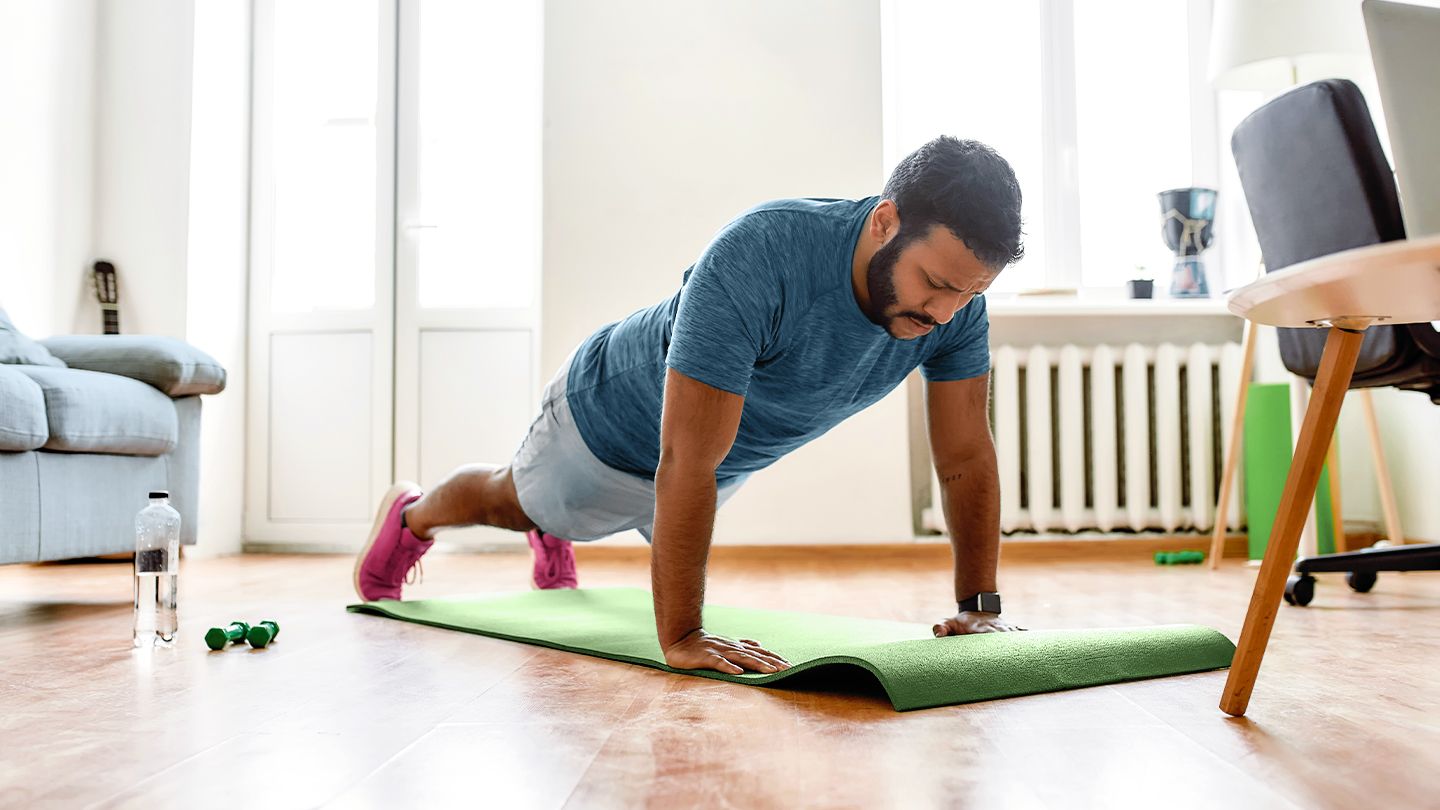
Push-ups strengthen your chest, shoulders, triceps, and core all at once. Most beginners try floor push-ups too soon and end up with sagging hips and strained shoulders. Start with wall push-ups instead. Stand arm’s length from a wall, place your hands at chest height, and lower yourself in and out. As you get stronger, progress to an incline push-up with your hands on a sturdy counter or couch, then eventually the floor. cite🛠web_search:17#3:~:text=Wall push-ups...strengthens your arms, shoulders, and core without putting too much pressure on your wrists or joints
Glute bridges target your posterior chain — the glutes and hamstrings that modern sitting habits tend to weaken. Lie on your back with knees bent and feet flat on the floor. Press through your heels to lift your hips until your body forms a straight line from shoulders to knees. Squeeze your glutes at the top and lower slowly. This movement protects your lower back and improves posture.
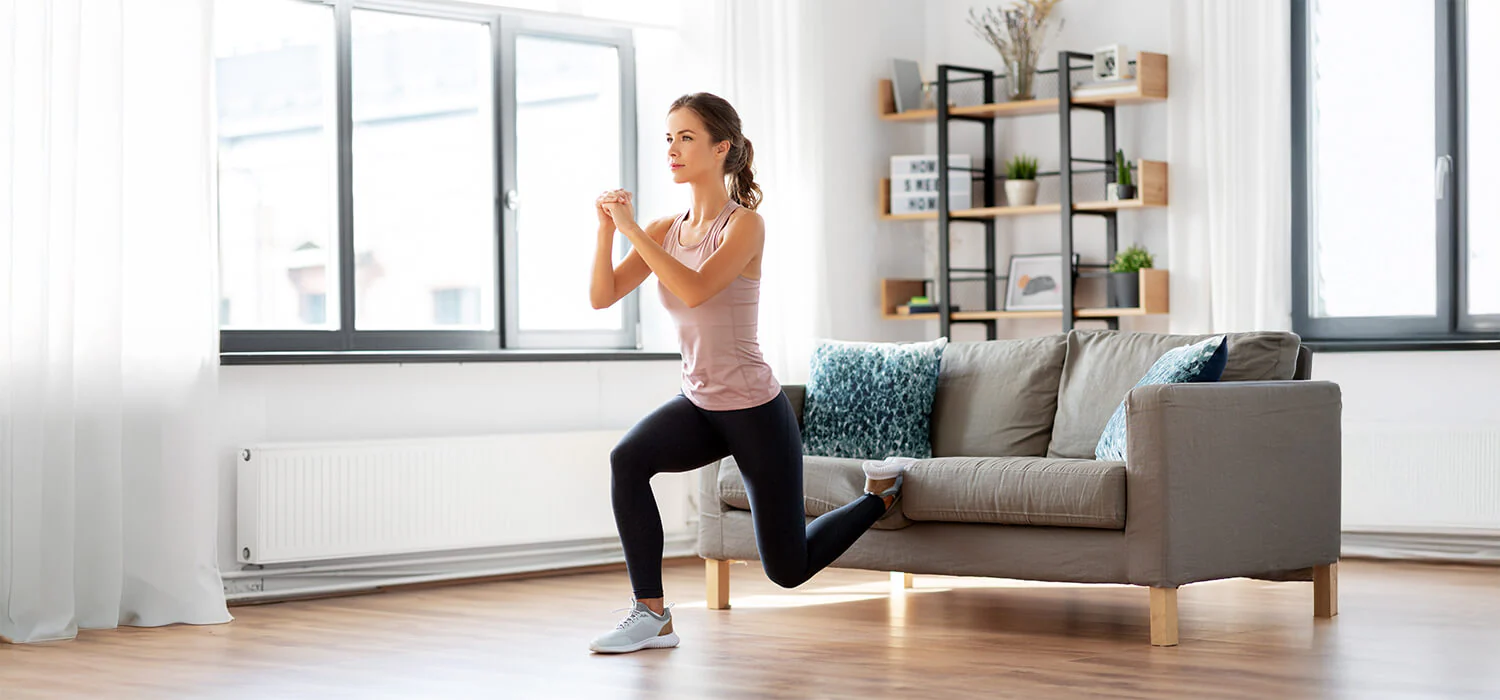
Reverse lunges challenge your balance while building single-leg strength. Step one foot back and lower until both knees form roughly ninety-degree angles. Press through your front heel to return to standing. Reverse lunges are generally gentler on the knees than forward lunges because they reduce the forward momentum that can jar the joint. cite🛠web_search:17#3:~:text=Reverse lunges can be a little gentler on the knees for beginners or anyone with a history of knee pain
Planks teach your entire core to work as a unit. Start on your forearms with elbows under your shoulders, body forming a straight line from head to heels. Don’t let your hips sag or pike upward. If a full plank is too much, drop to your knees and hold there. Even a fifteen-second hold builds meaningful stability over time.
Step-ups round out the routine by adding a practical, balance-focused movement. Find a sturdy staircase or low bench. Step one foot up, press through the heel to lift your body, then step back down. Alternate legs. It’s essentially a controlled version of climbing stairs, and it builds leg strength while training coordination. cite🛠web_search:17#3:~:text=Step-ups...strengthens your legs and glutes and trains your balance
How to Structure Your First Few Weeks
Random exercise is better than no exercise, but a simple structure gets you results faster and keeps you from doing too much too soon. Aim for three sessions per week with at least one rest day between each. Each session should take about twenty minutes including a brief warm-up.
Here’s a starter template. Perform each exercise for the listed reps or time, rest for thirty seconds, then move to the next. Complete the full circuit three times.
- 10 squats
- 8 wall or incline push-ups
- 10 glute bridges
- 8 reverse lunges per leg
- 20-second forearm plank
- 10 step-ups per leg
If three rounds feels impossible on day one, do two. If it feels easy after two weeks, add a fourth round or increase your reps by two per exercise. That gradual progression — doing slightly more than last time — is what transforms a casual activity into an actual training stimulus. cite🛠web_search:17#4:~:text=The whole point is “do a bit more than last time”
Scaling Options for Every Fitness Level
| Exercise | Beginner Version | Standard Version | Next Step |
|---|---|---|---|
| Squat | Sit-to-stand from chair | Bodyweight squat | Jump squat or split squat |
| Push-up | Wall push-up | Incline or knee push-up | Full floor push-up |
| Glute Bridge | Two-leg bridge, feet elevated | Standard glute bridge | Single-leg bridge |
| Lunge | Supported reverse lunge | Bodyweight reverse lunge | Walking lunge |
| Plank | Knees-down plank | Forearm plank | Plank with shoulder taps |
| Step-up | Low stair step-up | Standard step-up | Weighted step-up |
The Benefits and the Honest Challenges
Benefits:
- Zero cost and no equipment needed to start
- Builds functional strength that improves daily life
- Teaches proper movement patterns safely
- Can be done anywhere in under thirty minutes
- Easy to scale up or down based on your ability
Challenges:
- Progress can feel slower than weighted training
- Some muscle groups, like the back, are harder to target without equipment
- It requires self-discipline without a gym environment or class schedule
- Beginners may struggle to know if their form is correct without feedback
- Workouts can feel repetitive without variety
Expert Tip: Film Yourself Once a Week
The biggest risk for beginners isn’t doing too little — it’s doing too much with poor form. Without a trainer watching, small compensations creep in. Knees cave during squats. Lower backs arch during planks. Elbows flare too wide during push-ups.
Set your phone against a water bottle and record one set of each exercise once a week. Watch it back and compare your movement to reputable form tutorials. You don’t need to be perfect, but you do want to catch bad habits before they become ingrained. This single habit can save you months of frustration and prevent the kind of nagging aches that make people quit.
Also, prioritize consistency over intensity. Three twenty-minute sessions every week for a month beats one heroic hour-long workout followed by two weeks of soreness and avoidance. The people who transform their fitness are rarely the ones who go hardest on day one. They’re the ones who keep showing up. cite🛠web_search:17#2:~:text=Schedule your workouts like appointments, keep them short enough that starting feels easy, and track each completed session
Frequently Asked Questions
Can I really build muscle with just bodyweight exercises?
Yes, especially as a beginner. Muscle growth requires tension and progressive overload, and both can be achieved by increasing reps, slowing down your tempo, or moving to harder variations of the same exercise. You won’t become a bodybuilder without weights, but you can absolutely gain strength, improve muscle tone, and build a solid foundation. cite🛠web_search:17#4:~:text=Bodyweight exercises can build muscle mass, as long as you do what’s called “progressive overload”
How long until I see results?
Most beginners notice improved energy and better sleep within the first two weeks. Physical changes like improved posture and subtle muscle definition typically appear around the four-to-six-week mark if you’re training consistently three times per week. Remember that nutrition and sleep play huge roles in how quickly your body responds.
What if I have knee or back pain?
Start with the most conservative variations. For knee pain, avoid deep lunges and stick to glute bridges, shallow squats to a chair, and wall push-ups. For back pain, prioritize core bracing during planks and avoid any movement that causes sharp discomfort. Always consult a healthcare provider if pain persists, but gentle, controlled bodyweight work often helps rather than hurts when done correctly.
Do I need to warm up and cool down?
Yes, but keep it simple. A three-minute warm-up of marching in place, arm circles, and gentle leg swings prepares your joints and raises your heart rate. After your workout, spend two minutes walking slowly and stretching your hips, hamstrings, and chest. It doesn’t need to be elaborate to be effective.
What if I get bored doing the same exercises?
Boredom is real, but variety is less important than consistency. Stick with the same six movements for at least four weeks so your body has time to adapt and improve. After that, you can swap in lateral lunges, triceps dips on a chair, or calf raises to keep things fresh. Just don’t change your routine so often that you never master the basics.
Final Thoughts
Fitness doesn’t require a garage gym, expensive gear, or a complicated app subscription. It requires a small amount of space, a willingness to start where you are, and the patience to improve gradually. Bodyweight training gives you everything you need to build strength, confidence, and healthy habits without spending a dime.
Pick six movements. Schedule three sessions a week. Do a little more than last time each week. Film yourself occasionally. Rest when you need to. That’s it. The best workout program is the one you’ll actually follow, and nothing is more followable than a routine that lives in your living room and waits for you whenever you’re ready.
🎥 Recommended Video
Watch: Beginner Bodyweight Workout at Home — No Equipment Needed


0 Comments