You roll out of bed, shuffle to the kitchen, and pour coffee like it's a medical necessity. By the time you're halfway through your first cup, your body is still running on yesterday's tension. Your hips are tight from sitting. Your shoulders creep toward your ears. And your lower back? It hasn't forgiven you for that couch marathon yet.
The fix is simpler than most people think. You don't need an hour-long yoga class or expensive equipment. A short, intentional morning stretch routine can change how your entire body feels for the rest of the day. Here's what actually works, why it matters, and how to build a routine you'll actually stick with.

Why Morning Stretching Feels So Different
Your body spends roughly eight hours in mostly the same position while you sleep. Muscles shorten. Joints stiffen. Fluid that lubricates your tissues pools in places that don't need it. When you first stand up, everything protests a little.
Stretching in the morning isn't just about touching your toes. It's about reminding your nervous system that movement is safe. Gentle stretching increases blood flow, warms up connective tissue, and signals your brain that it's time to shift from rest mode into active mode. That transition is what makes the rest of your day feel easier.
Research consistently shows that regular stretching improves range of motion, reduces muscle tension, and can even lower perceived stress levels. When you do it first thing in the morning, those benefits carry through your commute, your desk hours, and whatever workout you have planned later.
The Five-Minute Foundation Routine
If you're just starting out, don't overwhelm yourself. Five minutes is enough to make a real difference. The key is hitting the areas that tighten up most during sleep and daily life.
Cat-Cow on all fours. Start on your hands and knees. Arch your back up like a cat, then drop your belly down and lift your chin. Move slowly with your breath. This wakes up your spine and releases tension in your lower back. Do ten slow rounds.
Child's pose with side reaches. From all fours, sit back onto your heels and stretch your arms forward. Then walk both hands to the right and hold. Walk them to the left and hold. This opens your hips, shoulders, and the muscles along your sides.
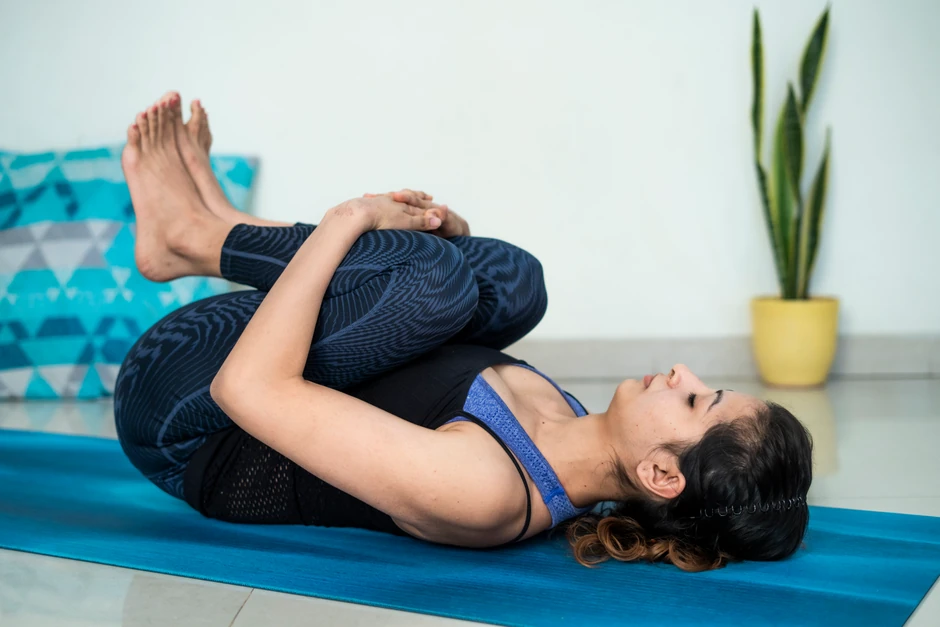
Supine figure-four stretch. Lie on your back, cross your right ankle over your left knee, and gently pull your left thigh toward your chest. Switch sides. This targets the piriformis and outer hip muscles, which get notoriously tight from sitting.
Neck rolls and shoulder shrugs. Drop your chin to your chest, roll your head in a slow half-circle, and shrug your shoulders up and down. Most morning stiffness lives in the neck and upper back. This takes thirty seconds and feels immediately better.
Standing forward fold. Stand with soft knees, hinge at your hips, and let your upper body hang toward the floor. Don't force it. Let gravity do the work. This decompresses your spine and stretches your hamstrings after hours of lying flat.
Adding Movement to Your Stretches
Once the basic routine feels comfortable, add some gentle movement. Static stretching is great, but dynamic stretching—moving through a range of motion—better prepares your body for real-world activity.
Try leg swings while holding a wall for balance. Swing one leg forward and back like a pendulum, then side to side. This opens your hip flexors and adductors without forcing any position.
Add arm circles and torso twists while standing. These mimic the rotational movements you use all day—reaching, turning, lifting. Your body responds better to stretches that resemble actual movement rather than holding still in an awkward shape.
World's Greatest Stretch is another excellent addition. Step forward into a lunge, place your opposite hand on the floor, and rotate your torso toward your front leg. It hits hips, hamstrings, thoracic spine, and shoulders in one flowing motion. Three reps per side is plenty.
Static vs. Dynamic Stretching: When to Use What
| Factor | Static Stretching | Dynamic Stretching |
|---|---|---|
| Best Time | After waking up or post-workout | Before activity or mid-day energy boost |
| Movement Style | Hold a position for 15–30 seconds | Move through range of motion continuously |
| Primary Benefit | Increases flexibility and releases tension | Warms muscles and improves mobility |
| Ideal For | Tight hips, hamstrings, lower back | Preparing for walking, sports, or lifting |
| Intensity | Low and relaxing | Moderate and energizing |
| Examples | Child's pose, forward fold, figure-four | Leg swings, arm circles, walking lunges |
The Benefits and Risks of Morning Stretching
Like any wellness habit, stretching has both upsides and potential downsides. Knowing both keeps your expectations realistic and your body safe.
Benefits
- Improved daily mobility: Regular stretching makes bending, reaching, and walking feel noticeably easier within a few weeks.
- Reduced muscle tension: Morning stiffness fades faster when you address it consistently rather than ignoring it.
- Better posture awareness: Stretching reminds you how your body should feel, which helps you catch slouching before it becomes chronic.
- Lower stress levels: Slow, intentional movement activates your parasympathetic nervous system, which calms your mind before the day begins.
Risks
- Overstretching cold muscles: Your body is literally cooler in the morning. Pushing too hard too fast can strain tissues.
- Hypermobility issues: If your joints are already very flexible, aggressive stretching can destabilize them over time.
- Existing injuries: Stretching through pain is never the answer. Sharp or radiating discomfort means stop and consult a professional.
- Time inconsistency: Sporadic stretching feels good but doesn't create lasting change. The risk is giving up before benefits appear.
Expert Tip: Anchor It to an Existing Habit
The hardest part of any morning routine isn't the stretching itself. It's remembering to do it.
Here's the trick that actually works: attach your stretch routine to something you already do every morning. After you brush your teeth, before your coffee finishes brewing, or right after you let the dog out. The existing habit becomes the trigger. Your brain doesn't have to decide whether to stretch. It just follows the sequence.
Start with two minutes, not twenty. Two minutes of actual stretching beats twenty minutes of good intentions. Once the habit sticks, your body will start asking for more time. That's when you expand to five or ten minutes. But never start there. Start so small it feels almost silly. That's how habits survive.
Frequently Asked Questions
How long should a morning stretch routine be?
Five to ten minutes is enough for most people. If you have more time, great. But consistency matters more than duration. A short daily routine beats a long weekly one.
Should I stretch before or after breakfast?
Either works. Some people prefer stretching on an empty stomach to avoid discomfort in forward folds. Others like a light snack first for energy. Experiment and see what feels better for your body.
Can stretching replace a morning workout?
Not entirely. Stretching improves flexibility and reduces tension, but it doesn't build strength or cardiovascular fitness. Think of it as a complement to movement, not a substitute. A ten-minute stretch plus a brisk walk covers more bases than either alone.
What if I'm not flexible at all?
That's exactly why you should start. Flexibility isn't a prerequisite for stretching—it's the result. Use props like pillows or yoga blocks to support your body. Bend your knees in forward folds. Modify every pose until it feels manageable, not painful. Progress comes from showing up, not from forcing range of motion.
Is it safe to stretch first thing after waking up?
Yes, with one condition: keep it gentle. Your muscles are cooler and less pliable in the morning. Avoid deep, aggressive stretches until you've moved around for a few minutes. Warm up with cat-cow or gentle walking in place before attempting deeper poses.
Final Thoughts
Morning stretching isn't about becoming a yogi or touching your forehead to your shins. It's about giving your body a gentle transition from sleep into the demands of the day. The people who stick with it don't do so because they're naturally flexible. They stick with it because they notice the difference.
Less stiffness getting out of the car. Fewer aches after sitting at a desk. A calmer mind before the inbox explodes. Those small wins compound over time until movement just feels easier.
Pick three stretches from this guide. Anchor them to something you already do every morning. Start tomorrow. Your body will thank you by next week.
🎥 Recommended Video
Watch beginner morning stretch routines →


0 Comments