Introduction
There was a time when fitness meant pushing your body to the limit. Heavy weights. High intensity. Sweat dripping off your chin. But something has shifted. More and more people are discovering that the real secret to staying mobile, pain-free, and energized isn't found in exhaustion — it's found in gentleness.
Gentle yoga, once dismissed as "too easy" or "not a real workout," is now becoming one of the most trusted habits for everyday mobility. Not because it's trendy, but because it works. It meets your body exactly where it is, asks nothing unreasonable, and quietly builds the kind of functional strength that makes daily life feel lighter.
Whether you're in your thirties and stiff from desk work, in your fifties noticing your balance isn't what it used to be, or simply someone who wants to move better without the wear and tear — gentle yoga has something real to offer. Let's explore why this practice is winning people over, what the science says, and how you can make it part of your everyday routine.
What Gentle Yoga Actually Is — And What It Isn't
Let's clear up a common misconception first. Gentle yoga isn't about doing less. It's about doing differently. Unlike power yoga or hot yoga, where the goal is often to push physical boundaries, gentle yoga focuses on mindful movement, breath awareness, and supported poses held for longer periods.
According to Cleveland Clinic, restorative and gentle yoga sessions are built around fewer poses that you hold for five to ten minutes at a time. The goal isn't to deepen a stretch through force — it's to let your body soften into it while your mind settles. Props like pillows, blankets, and bolsters are encouraged. Discomfort is not. citeweb_search:7#3
This approach makes gentle yoga radically inclusive. You don't need to be flexible. You don't need to be young. You don't even need to stand up. Chair-based variations exist for those with limited mobility, and almost every pose can be modified to match your body's current abilities. citeweb_search:9#1
Why Mobility Matters More Than Ever
Mobility is the ability to move your joints through their full range of motion with control. It's not the same as flexibility, which is passive. Mobility is active — it requires strength, stability, and coordination working together.
Here's the problem: modern life steals our mobility. We sit for hours. We stare at screens. We move in the same patterns day after day. Over time, hips tighten, shoulders round, spines stiffen, and ankles lose their range. What starts as mild stiffness can eventually limit everyday activities — bending to tie your shoes, reaching for a high shelf, or simply walking without discomfort.
A 10-country study of over 350,000 adults aged 60 and older found that the average senior spends 9.4 hours a day in sedentary activities. That's a lot of sitting, and it puts people at high risk for premature aging and mobility loss. citeweb_search:9#0 The good news? Gentle yoga directly counteracts this decline.
The Science Behind Gentle Yoga and Mobility
The research supporting gentle yoga for mobility has grown substantially. A systematic review and meta-analysis of six clinical trials found that yoga-based exercise interventions in adults over 60 had a meaningful effect on both balance and physical mobility. The effect size for physical mobility was particularly notable. citeweb_search:9#0
Harvard researchers reviewed 33 randomized controlled studies involving 2,384 participants over 65 and found that yoga significantly improved walking speed and the ability to rise from a chair — both strong predictors of longevity and independence. Slower walking speeds are directly connected to higher risk of death in older adults, so this finding carries real weight. citeweb_search:9#5
In another pilot randomized controlled trial, sedentary older adults practiced yoga twice weekly for 10 weeks. The results showed improved chair-stand performance, better gait and balance mechanics, and maintained grip strength compared to a health education control group. Effect sizes for mobility-related measures ranged from 0.38 to 0.70 — indicating moderate to strong improvements. citeweb_search:9#4
Even at the cellular level, yoga shows promise. A comprehensive review published in Experimental Gerontology found that yoga increases antioxidant enzyme activity, reduces inflammatory markers like IL-6 and TNF-α, and may even help preserve telomere length — the protective caps on our DNA that shorten with age. citeweb_search:7#0
How Gentle Yoga Builds Everyday Functional Movement
Functional movement refers to the natural patterns your body uses in daily life — squatting, lunging, bending, reaching, twisting, and walking. Gentle yoga naturally trains these patterns, often without practitioners even realizing it.
Consider these common gentle yoga poses and their real-world applications:
- Cat-Cow sequence: Improves spinal mobility and coordination between breath and movement — essential for anyone who sits at a desk.
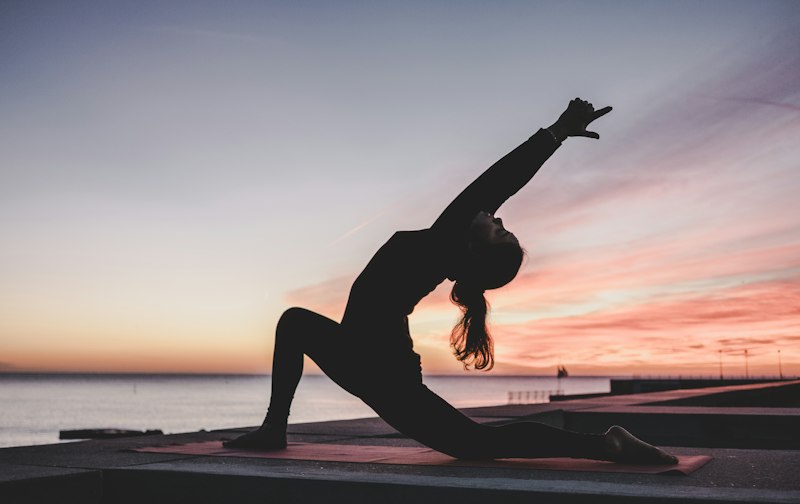
- Low Lunge (Anjaneyasana): Opens tight hip flexors and stretches the ankles, making squatting, stair-climbing, and standing up from a chair feel easier. citeweb_search:8#0
- Supported Bridge Pose: Gently strengthens the posterior chain while relieving tension from prolonged sitting.
- Child's Pose: Releases the lower back, shoulders, and hips — areas that hold stress from daily activities.
- Seated Spinal Twist: Maintains rotational mobility in the spine, which is critical for turning, reaching, and driving safely. citeweb_search:8#2
A study on collegiate athletes found that 12 weeks of yoga intervention significantly improved functional movement screen scores, particularly in deep squat, shoulder mobility, and trunk stability. The yoga group's injury risk decreased as their movement quality improved. citeweb_search:8#3 While this study focused on athletes, the principle applies to everyone: better movement patterns mean safer, more efficient daily living.
The Mental Side of Mobility
Here's something people don't talk about enough: your mind affects how you move. Stress, anxiety, and mental fatigue create physical tension. Your shoulders creep up toward your ears. Your jaw clenches. Your breath becomes shallow. Over time, this tension becomes your body's default state.
Gentle yoga addresses this directly. By activating the parasympathetic nervous system — your body's "rest and digest" mode — it helps release chronic tension that restricts movement. Cleveland Clinic notes that restorative yoga centers this relaxation response, slowing heart rate, lowering blood pressure, and reducing the internal mental chatter that keeps muscles guarded. citeweb_search:7#3
A study on Japanese night-shift nurses found that even brief restorative yoga sessions — as short as five minutes — significantly reduced psychological and physical stress reactions. The practice helped them relax during breaks and manage occupational stress more effectively. citeweb_search:7#2
When your nervous system feels safe, your muscles let go. And when your muscles let go, your joints move more freely. That's the mind-body connection in action.
Who Benefits Most from Gentle Yoga?
The honest answer? Almost everyone. But certain groups find it especially valuable:
- Desk workers: Counteracts the stiffness and postural imbalances created by hours of sitting.
- Older adults: Improves balance, reduces fall risk, and maintains independence in daily activities. citeweb_search:9#2
- People recovering from injury: Provides movement without strain, supporting healing while preventing deconditioning.
- High-stress individuals: Offers a forced slow-down that the nervous system desperately needs.
- Fitness beginners: Builds body awareness and foundational mobility before attempting more intense exercise.
- Athletes: Serves as active recovery, reducing soreness and improving movement quality. citeweb_search:7#4
Even third-year medical students who participated in just one 45-minute restorative yoga session per week for six weeks showed improved relaxation, self-esteem, and mental clarity. citeweb_search:7#3 If it works for overworked medical students, it can work for you.
Comparison: Gentle Yoga vs. Other Movement Practices
| Factor | Gentle Yoga | Traditional Exercise | High-Intensity Workouts |
|---|---|---|---|
| Joint Impact | Very low, joint-friendly | Moderate | Higher, more strain |
| Accessibility | All ages and fitness levels | Requires baseline fitness | Requires good conditioning |
| Stress Reduction | High — activates relaxation response | Moderate | Can increase cortisol |
| Functional Mobility | Directly trains daily movement patterns | Depends on exercise type | Often sport-specific |
| Recovery Benefit | Excellent active recovery | Moderate | Requires more recovery time |
| Equipment Needed | Minimal — mat, pillows, blanket | Gym or weights often needed | Gym or specialized equipment |
| Sustainability | Highly sustainable long-term | Good | Higher dropout rates |
Benefits & Considerations
Key Benefits of Gentle Yoga for Mobility
- Improved joint range of motion: Passive, supported stretches allow muscles to release deeply without forcing.
- Better balance and stability: Standing poses and weight shifts train proprioception — your body's awareness of its position in space. citeweb_search:9#2
- Reduced chronic pain: Gentle stretching and relaxation can alleviate tension-related discomfort in the back, neck, and hips.
- Enhanced recovery: Promotes muscle relaxation and lowers cortisol, helping your body bounce back from other activities.
- Stress relief: The meditative aspect quiets the mind, which in turn releases physical tension.
- Better sleep: Evening gentle yoga sessions can improve sleep quality by calming the nervous system before bed. citeweb_search:7#4
Things to Keep in Mind
- It's not a quick fix: Mobility gains come from consistency, not intensity. Expect gradual improvement over weeks.
- Not a replacement for all exercise: While excellent for mobility and recovery, gentle yoga alone may not build significant cardiovascular fitness or maximal strength.
- Form matters: Even gentle poses can cause strain if misaligned. Learning from a qualified instructor initially is valuable.
- Medical conditions: If you have serious joint issues, recent surgery, or chronic conditions, consult your healthcare provider before starting. citeweb_search:9#0
- Progression is personal: What feels gentle for one person may be challenging for another. Honor your body's signals.
Expert Tip
Start smaller than you think you need to. Ten minutes of gentle yoga in the morning can shift how your entire day feels. You don't need a 90-minute class. You don't need fancy leggings. You need a mat — or even just a carpeted floor — and the willingness to show up.
Here's a simple framework: Pick three poses that address where you feel tightest. Hold each for two to three minutes while breathing slowly. A Cat-Cow for your spine. A Low Lunge for your hips. A Supported Bridge for your lower back. That's it. Nine minutes. Done consistently, this micro-practice will outperform occasional hour-long sessions.
And remember — gentle yoga isn't about achieving a pose. It's about creating a conversation with your body. Some days that conversation is deep and productive. Other days it's brief and quiet. Both are valid. The mat doesn't judge. It just meets you where you are.
FAQ
How often should I practice gentle yoga to see mobility improvements?
Consistency matters more than duration. Research suggests that even 10 to 15 minutes, two to four times per week, can produce meaningful benefits over time. citeweb_search:9#1 As you get more comfortable, you can gradually increase frequency or session length.
Do I need to be flexible to start gentle yoga?
Not at all. Flexibility is a result of practice, not a prerequisite. Gentle yoga is specifically designed to be accessible regardless of your starting point. Props and modifications make every pose adaptable to your current range of motion.
Can gentle yoga really replace more intense exercise?
It depends on your goals. For mobility, stress reduction, recovery, and functional movement, gentle yoga is highly effective. However, if your goals include building significant cardiovascular endurance or maximal strength, you'll want to complement yoga with other forms of exercise.
Is gentle yoga safe for older adults or people with joint issues?
Yes — with appropriate modifications. Studies show high acceptability and safety for older adults, including chair-based options for those with limited mobility. citeweb_search:9#0 Always consult your doctor if you have specific medical concerns, and work with an instructor experienced in adaptive yoga.
What's the difference between gentle yoga and restorative yoga?
There's overlap, but restorative yoga typically involves longer-held poses (5–10+ minutes) with extensive prop support for deep relaxation. Gentle yoga may include slightly more active movement and shorter holds while still maintaining a slow, mindful pace. Both support mobility and stress relief. citeweb_search:7#3
Final Thoughts
We live in a culture that celebrates intensity. The harder, the better. The sweatier, the more effective. But our bodies don't always agree. Sometimes what we need isn't more force — it's more listening.
Gentle yoga offers that listening. It teaches us that movement doesn't have to hurt to help. That progress can be quiet. That showing up softly, consistently, and with intention builds something durable.
Everyday mobility isn't about touching your toes or holding a perfect pose. It's about bending to pick up your grandchild without wincing. It's about walking up stairs with confidence. It's about getting out of bed in the morning without stiffness dictating your first hour.
Gentle yoga won't make headlines for being extreme. But it might just change how you feel in your body — one breath, one pose, one morning at a time.
━━━━━━━━━━━━━━━━━━
🎥 Recommended Video
https://www.youtube.com/results?search_query=gentle+yoga+everyday+mobility+routine
━━━━━━━━━━━━━━━━━━
💡 Related Topics You Might Enjoy
- Morning mobility routines for desk workers
- Chair yoga for beginners and seniors
- Yoga for lower back pain relief
- Breathing techniques for stress reduction
- Functional movement exercises for daily life


0 Comments